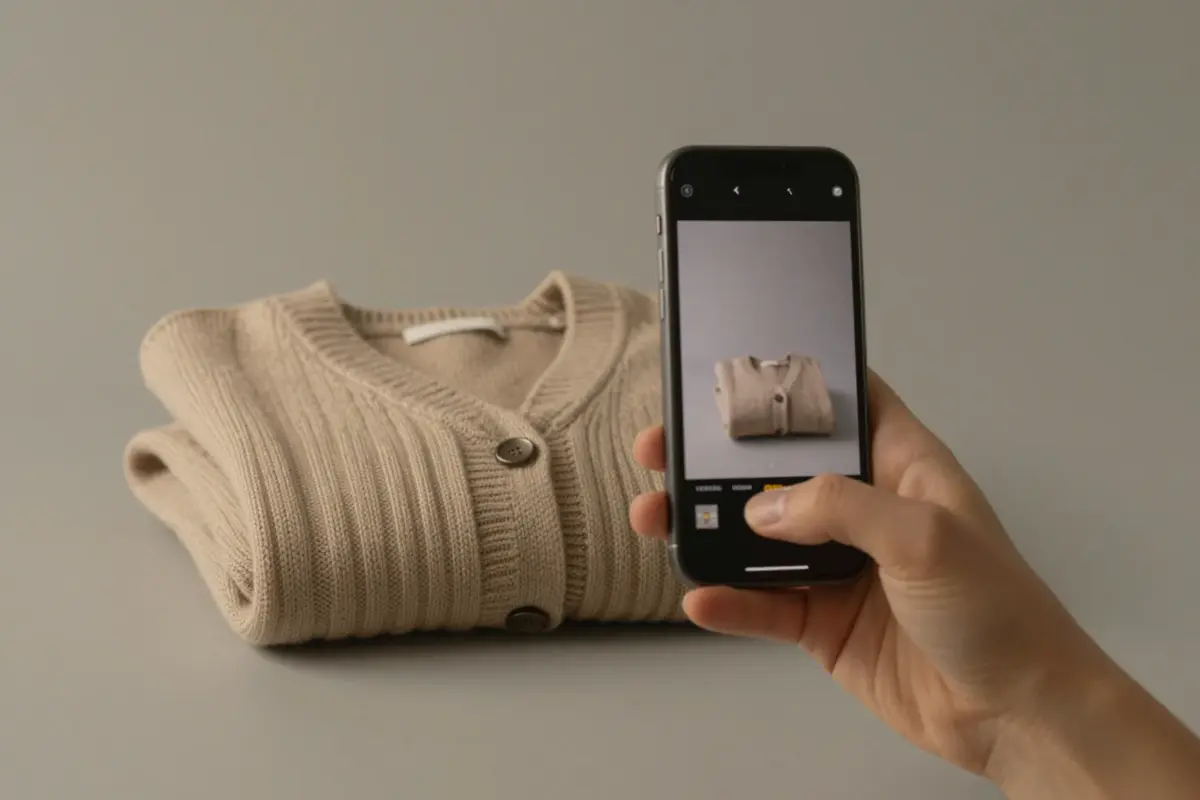
The fastest way to spot a fake Thom Browne is to check three things first: the grosgrain tricolor tab, the four-bar stripe on the left sleeve, and the woven main label. Real tabs have a ribbed texture with clean red, white, and blue bands. Get those three right and you have filtered out most counterfeits before you look at anything else.
Start With the Grosgrain Tricolor Tab
The fastest tell on any Thom Browne piece is the grosgrain ribbon tab. Real tabs use a tight, flat weave in red, white, and blue. The colors sit in clean vertical bands with no bleed between them.
On fakes the ribbon feels thin and shiny. The red often runs orange, and the blue drifts toward navy or purple. Hold it in daylight. Authentic grosgrain has a subtle ribbed texture you can feel with a fingertip.
Look at where the tab is sewn. Thom Browne anchors it at the back of the collar, the left hip, or the sleeve, depending on the piece. The stitches are dense and even. A loose thread or a crooked tab is a fast red flag.
I have checked hundreds of these tabs. A small woven detail like this is hard to judge from a photo, so Legit Check reads the weave, the color spacing, and the stitch density in seconds and returns a reasoned score.
Measure the Four-Bar Stripe
The four white bars on the left sleeve are Thom Browne’s signature. On real pieces the bars are knit or woven into the fabric, not printed on top. Run a finger across them. You should feel a slight change in texture, not a flat plastic layer.
Spacing matters. The four bars sit parallel with even gaps between each one. Fakes often crowd the bars together or space them unevenly. Compare the top gap to the bottom gap. They should match.
Position is consistent too. The bars wrap the upper left arm, not the forearm or the right side. A stripe on the wrong sleeve is an instant fail.
Color is the last check here. The bars read bright white against the base fabric. On counterfeits they can look cream or gray, especially after a single wash.
Read the Main Label and RN Number
Open the piece and find the main woven label at the neck or waistband. Thom Browne text is crisp with even letter spacing. The weave is dense, so letters have clean edges instead of fuzzy, pixelated ones.
Near it you will find a care tag with an RN number. RN stands for Registered Number, issued by the US Federal Trade Commission. You can look it up on the FTC public database and confirm it matches the company.
Fakes frequently reuse a random RN or invent one. A number that returns a different company, or nothing at all, tells you plenty.
Font is the giveaway on labels. Counterfeiters rarely match the exact typeface. If the T looks off or the spacing feels tight, trust that instinct. For a deeper primer on brand markings, my streetwear authentication guides walk through the same label reads across labels.
Photograph the item and Legit Check runs these same checks in seconds, returning a confidence score and the reasoning behind it.
Check Buttons, Zippers, and Stitching
Thom Browne hardware is heavy. Buttons on the cuffs and front feel substantial and often carry engraved branding. Pick one up. Real buttons have weight and a smooth finish. Hollow, light, rattly buttons point to a fake.
The functioning buttonhole on the left sleeve is a detail fakes skip or imitate poorly. On authentic tailoring the four-bar area often pairs with real working buttons. Cheap copies stitch a fake slit or leave it out.
Stitching is tight and consistent across the whole piece. Thom Browne uses high stitch counts, so seams look clean with no puckering. Flip the garment inside out. Sloppy interior seams are where corners get cut.
Zippers on jackets and bags are branded and glide smoothly. A generic zipper with no branding, on a piece that should have one, is a warning sign.
Weigh the Fabric and Feel the Finish
Weight is one of the hardest things for a counterfeiter to fake. Thom Browne knitwear and shirting use dense, high quality yarn. The piece feels heavier than it looks. Thin, papery fabric is a red flag.
Cashmere and wool pieces have a soft, structured hand. They hold their shape. Fakes often use blended or synthetic yarn that feels rough or overly slick.
Check the collar and cuffs on polos and cardigans. Real ribbing springs back when stretched. Cheap knits stay loose and warped.
Smell can help on new pieces. A strong chemical odor often signals the cheap dyes and glues used in fast counterfeit production.
Where You Buy Matters More Than the Details
Even a trained eye gets fooled by a good photo. The safest move is buying from Thom Browne directly or an authorized stockist. The official site lists retailers you can trust at thombrowne.com.
On resale platforms, read the seller history. A very low price on a brand that rarely discounts should make you pause. If a cardigan that retails high is listed for a fraction, ask why.
Ask for extra photos. Request close shots of the grosgrain tab, the four bars, the main label, and the RN tag. A real seller sends them. A scammer stalls.
When you cannot inspect in person, run the photos through a pre check first. Legit Check applies the same tab, stripe, and label reads I use and gives you a confidence score with the reasoning, which beats guessing from a listing photo. If you want the cross-brand version of this method, see my guide to authenticating almost anything.
Frequently asked questions
Legitly offers AI-assisted guidance, not guaranteed authentication. For high-value purchases, confirm with a professional authenticator.