The fastest legit check on any item is to work from the outside in: vet the seller first, then read the logo, the stitching, and the serial before your money leaves your hands. I spent six years moderating authentication on resale marketplaces, and the same handful of tells caught the vast majority of fakes across sneakers, bags, watches, and electronics. This is the exact order I still use.
Start With the Seller, Not the Item
The first thing I check is never the product. It is the person selling it.
In my years moderating listings, most fakes gave themselves away before I zoomed in on a single stitch. A brand-new account with no history, a stock photo instead of the real item, and a price that undercuts everyone else is the pattern I saw over and over.
Ask for extra photos in natural light. A real seller holding a real item sends them in minutes. Someone moving fakes stalls, recycles the same three angles, or sends pictures that were clearly pulled off Google.
Read the written feedback, not just the star rating. Look for past buyers mentioning authenticity, refunds, or an item that arrived different from the listing.
Stay inside the platform. Requests to pay by wire, crypto, or gift card, or to move the deal to a chat app, are the single biggest red flag I know. For a broader walkthrough of the buying side, our authentication guides cover the marketplace traps in detail.
Read the Logo and Branding Up Close
Counterfeiters get close on the logo, but rarely perfect. The gap is where you win.
Zoom in on the font. Look at letter spacing, the weight of the strokes, and how corners are cut. Fakes tend to run slightly too thick, too thin, or unevenly spaced compared to a genuine reference.
Check alignment. On a real item the logo sits square and centered, with even margins. Tilted, off-center, or crooked placement is a classic tell.
Compare against an official product photo, not another listing. Pull the reference straight from the brand’s own site so you are not matching one fake to another. My fake Louis Vuitton bag breakdown shows how far off the monogram alignment can be even on convincing copies.
Study the Stitching and Construction
Stitching is where corners get cut, because clean stitching is slow and expensive.
Count the stitches across a set section if the brand is known for a fixed count. Genuine runs are even, tight, and straight. Fakes wander, skip, or bunch up at the corners.
Check the thread color and thickness. It should be consistent along the whole seam, with no loose ends or glue bleeding out from under the edge.
Feel the weight and the materials. Real leather has a specific smell and a soft, dense hand. Cheap coated canvas feels stiff and plasticky and often smells of chemicals. Hollow, light-feeling metal on hardware is another giveaway.
Verify Serials, Tags, and Codes
Serials, date codes, and batch numbers are useful, but they are not proof on their own.
Check the format first. Each brand follows a pattern for length, character mix, and placement. A code in the wrong font, stamped crooked, or sitting in the wrong spot fails before you ever look it up.
Know that good fakes clone real codes. A number that “checks out” online can simply be copied from a genuine unit, so never treat a valid-looking serial as a green light by itself.
Cross-reference the code against the other tells above. On watches especially, the engraving depth and font matter as much as the number itself, which is why my fake Rolex checklist leans on the whole package, not one field.
Serial formats shift and counterfeiters keep pace. This is one place Legit Check earns its keep: it reads the code, font, and placement against known-authentic references and returns a confidence score with the reasoning, which beats digging through forum threads.
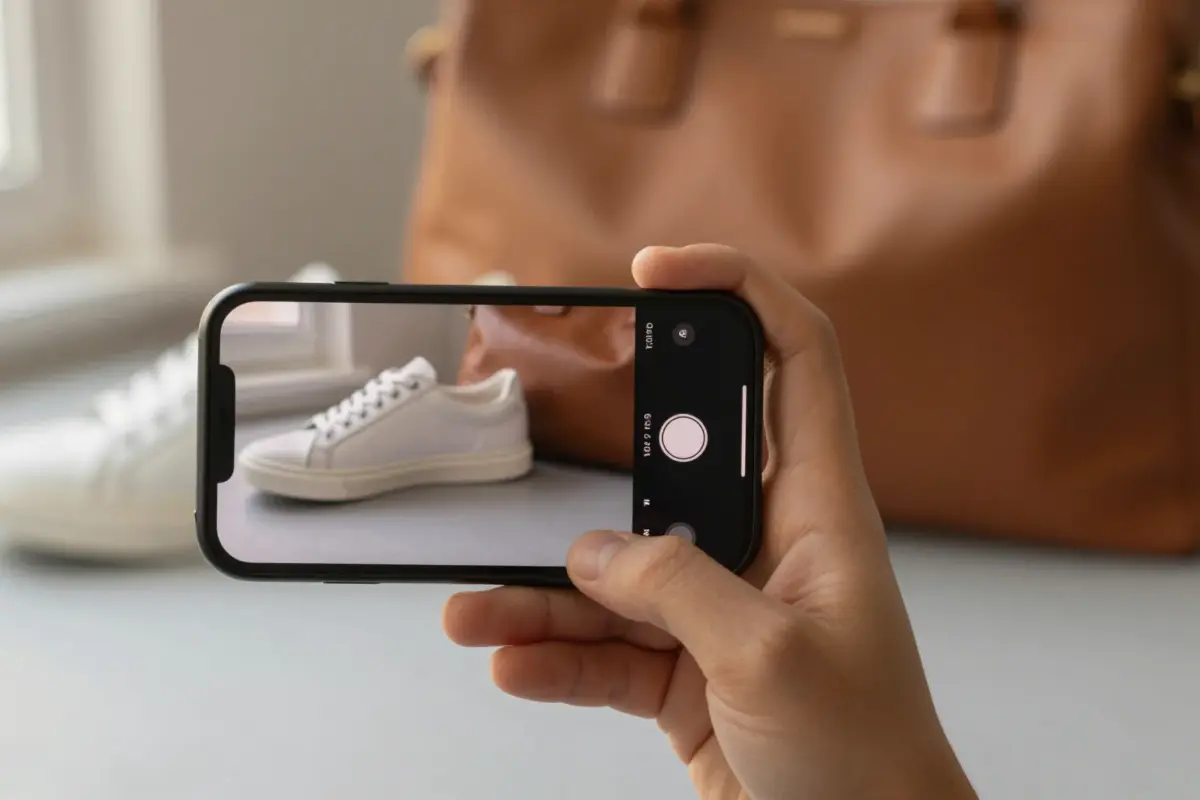
Photograph the item and Legit Check runs these same checks in seconds, returning a confidence score and the reasoning behind it.
Cross-Check the Price and the Deal
Price is data. A deal that feels too good usually is.
Look up the honest resale range for the exact model and condition. If a listing sits far below that floor, treat the gap as a warning, not a bargain.
Watch the urgency. “Only one left,” “ships today only,” and pressure to pay fast are tactics that push you past the checks you would normally run.
Here is the 60-second version I run before I commit to anything.
Know Why It Is Worth the Effort
Counterfeits are not a victimless bargain, and the volume is enormous.
U.S. Customs and Border Protection seizes billions of dollars in fakes every year, and the agency’s Fakes Hurt campaign lays out how counterfeit goods fund organized crime and skip every safety standard a real product has to meet.
For you as a buyer, the practical risk is simpler. Fakes fail faster, carry no warranty, and can be seized in the mail, which means you lose both the item and the money.
That is why a two-minute check up front is cheap insurance. The habit costs you nothing and saves you the far more expensive lesson.
Know When to Bring in a Pro
Your own eyes handle most everyday buys. Above a certain price, get backup.
A quick pre-check catches the obvious fakes in seconds, so you never waste a professional’s time on something clearly wrong.
For a four-figure purchase I pair two things: an AI pre-check from Legit Check to flag the easy tells fast, then a human authenticator who specializes in that brand before any money changes hands.
No app or expert is a guarantee, and anyone who promises certainty is selling you something. Treat authentication as stacking evidence until you are comfortable, then decide.
Frequently asked questions
Legitly offers AI-assisted guidance, not guaranteed authentication. For high-value purchases, confirm with a professional authenticator.