The fastest way to spot a fake Vetements hoodie is to look at three things: the oversized cut, the font on the neck label, and the edges of any print. Real pieces are heavy, boxy in a deliberate way, and finished cleanly inside. Fakes usually get the proportions wrong and rush the tags. Here are the six checks I run before I trust a listing.
Start With the Fit and the Weight
Vetements built its name on exaggerated proportions, so the fit is the first thing I read. A real hoodie is intentionally oversized: dropped shoulders that sit well past your natural shoulder line, a wide body, and long sleeves that often need cuffing. The cut looks boxy on purpose, not sloppy.
Weight tells you a lot too. Vetements uses heavy French terry and thick cotton fleece, so a genuine hoodie feels dense in your hands. Pick it up. If it feels thin, light, or papery, that is a bad sign.
Fakes tend to miss the balance. Either they copy the length but use a flimsy fabric, or they use a decent weight but cut the body too slim. Lay the hoodie flat and look at the shoulder seams and the ratio of body width to length. Counterfeiters rarely nail both at once.
One more tell: the inside of a real fleece hoodie has a soft, even loop texture. Cheap copies feel scratchy or have uneven brushing. Run your hand across it.
Read the Neck Label and the Fonts
The main label is where most fakes fall apart. Vetements uses a clean, specific sans-serif wordmark, all caps, evenly spaced. Look closely at the letter spacing and the weight of the strokes. On fakes the font is often slightly too bold, too condensed, or the spacing between letters drifts.
The label itself should be woven, not printed, with tight and consistent stitching where it attaches to the collar. Loose threads, crooked placement, or a label that feels glued on are red flags.
Compare what you are looking at against verified reference photos from a trusted seller or the official Vetements site. Hold your item next to a known-good image and check the font character by character. Fonts are hard to fake at scale, which is exactly why they are worth your time.
Matching a woven wordmark from a phone photo is genuinely tricky, and this is where Legit Check helps: photograph the tag and it reads the font, spacing, and label construction against known patterns, then gives you a reasoned confidence score instead of a guess. For deeper streetwear tags, our Off-White breakdown walks through the same idea on a different brand.
Check the Composition and Care Tags
Flip the hoodie inside out and find the care and composition tag, usually in the side seam. Vetements production runs mostly through Portugal, so many pieces read Made in Portugal. Some seasons and collabs differ, so a different country is not automatic proof of a fake, but the tag should still look professionally printed.
Read the actual text. The fiber content should match what the brand used that season, the print should be crisp, and the laundry symbols should be sharp and correctly spaced. Fakes often blur the small print or misalign the wash symbols.
- Font on the care tag matches the main label style
- Composition percentages are printed cleanly, not smudged
- Country of origin is spelled correctly and printed evenly
- The tag is sewn flat into the seam, not stitched at an angle
A genuine tag ages well. If the printing already looks cracked or faded on a supposedly new piece, be suspicious.
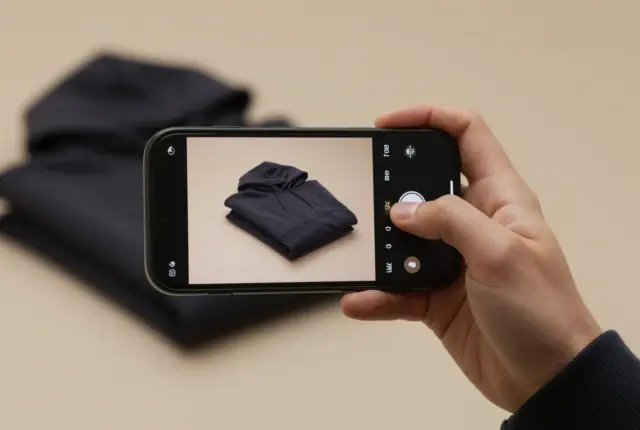
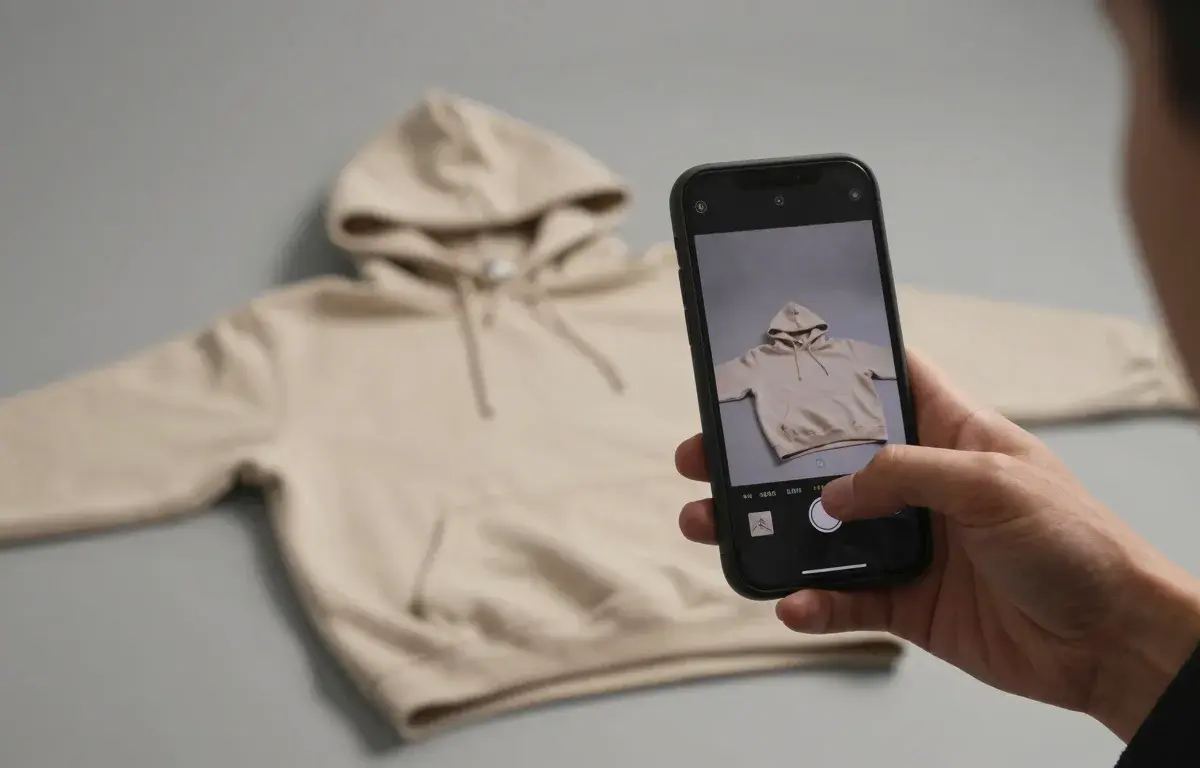
Photograph the item and Legit Check runs these same checks in seconds, returning a confidence score and the reasoning behind it.
Inspect the Print and Graphics
Vetements leans on bold graphics, from the DHL logo tee era to big back prints and slogans. Prints are where speed-run fakes reveal themselves.
Zoom in on the edges of any print. Real screen printing has clean, defined borders and consistent ink coverage. Fakes often show fuzzy edges, tiny dot patterns from cheap transfer printing, or ink that sits too thick and rubbery on the fabric.
Check alignment. Text should be level, logos centered where they belong, and both sleeves or panels should match. Counterfeiters frequently print graphics a little too high, too low, or off to one side.
Color matters too. Compare the exact shade against reference images. Fakes drift, a slightly wrong red or a gray that reads too blue. On lettering, look at the spacing and the shape of each character. A real print keeps even spacing across the whole word.
Look at Stitching, Zippers, and Hardware
Construction quality separates a 200 dollar hoodie from a 20 dollar copy. Turn the piece inside out and study the seams. Vetements stitching is straight, tight, and even, with no loose threads hanging off the hems or cuffs.
On zip-up styles, check the zipper. Genuine pieces use quality hardware, often YKK or a branded pull, and the zip runs smoothly without catching. Fakes tend to use flimsy zippers that feel gritty or snag.
Hardware should feel solid and cold, not light and plasticky. Any engraving on pulls or eyelets should be crisp and centered.
None of these alone convicts a piece, but stack two or three and you have your answer.
Consider the Source and the Price
Where a hoodie comes from is one of the strongest signals you have. Vetements retails high, and real deadstock rarely shows up cheap. If a brand new piece is listed at a fraction of retail, assume it is fake until proven otherwise.
Buy from stockists you can verify: the brand itself, established boutiques, or resale platforms with a real authentication step. On peer to peer marketplaces, read the seller’s history and ask for extra photos of the tags, seams, and prints.
If you are buying blind and want a second opinion, Legit Check reads these same signals from a few photos and returns a confidence score with its reasoning, which is handy before you send money on a peer to peer sale. For the full cross-brand method, see our authenticate anything guide or browse more streetwear checks.
Frequently asked questions
Legitly offers AI-assisted guidance, not guaranteed authentication. For high-value purchases, confirm with a professional authenticator.