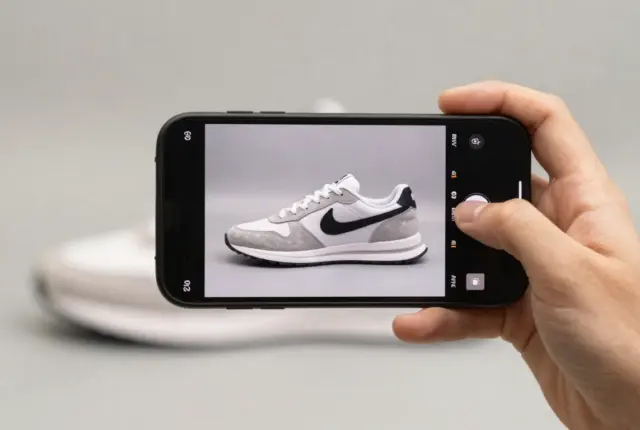
The fastest way to legit check a sneaker is to compare it against a verified pair and work through a few key details: the box label, the size tag, the stitching, and the overall shape. In my years checking listings, most fakes give themselves away on at least one of these before you ever look closer. This guide walks through the seven checks I run on any sneaker, whatever the brand.
Start With the Box and Its Label
The box gives you the first read before you even touch the shoe. Genuine boxes use thick, clean cardboard and a printed label that matches the pair inside.
Check the label first. The style code, size, and colorway printed on the side label should match the shoe and the listing exactly. A mismatched country of manufacture, or a barcode that will not scan, is one of the most common fake tells.
Look at the print quality next. Real labels have crisp fonts and even ink. Blurry text, off shades, or crooked alignment usually points to a replica box.
Photographing the label is where a phone helps. A Legit Check scan reads the code layout and flags anything that does not line up, so you get a reasoned read instead of a hunch.
Read the Size Tag and Factory Codes Inside
Open the shoe and look at the tongue tag. This is where a lot of fakes fall apart.
The size tag should sit straight, with clean stitching around the edges. The factory code and the size on this tag should match the box label. When the tag code and box code disagree, treat the pair as suspect.
Check the font weight and spacing. Genuine tags keep consistent letter spacing and sharp numbers. Fakes tend to run the text too thick or too thin.
Look for a UPC or QR sticker inside where the model uses one. A missing sticker, or a code that leads nowhere, is a red flag worth pausing on.
Check the Stitching, Glue, and Paint
Construction is the hardest thing for a factory to fake cheaply, so it is one of your best tools.
Run your eye along every seam. Real stitching is even, tight, and follows a straight line. Loose threads, uneven spacing, or stitches that drift off the panel edge point to a replica.
Check the glue next. Genuine pairs keep glue hidden inside the seams. Visible glue smears along the midsole, or excess adhesive on the upper, are classic fake signs.
Paint and dye should be clean where two colors meet. Bleeding color, fuzzy edges, or a paint line that wanders usually means corners were cut.
Judge the Shape and Proportions
Silhouette is what your eye notices first, even before you spot a bad stitch.
Compare the overall shape to a verified reference photo. Fakes often get the toe box too round, the heel too tall, or the midsole too thick. These small proportion errors add up to a shoe that looks off.
Set the pair on a flat surface and look from the side. Both shoes should sit level and symmetrical. Uneven height, a leaning heel, or a curved sole that should be straight are all warnings.
Check panel placement. On many models the exact position of overlays, logos, and perforations is well documented. When a panel sits a few millimeters off, you are likely holding a replica.
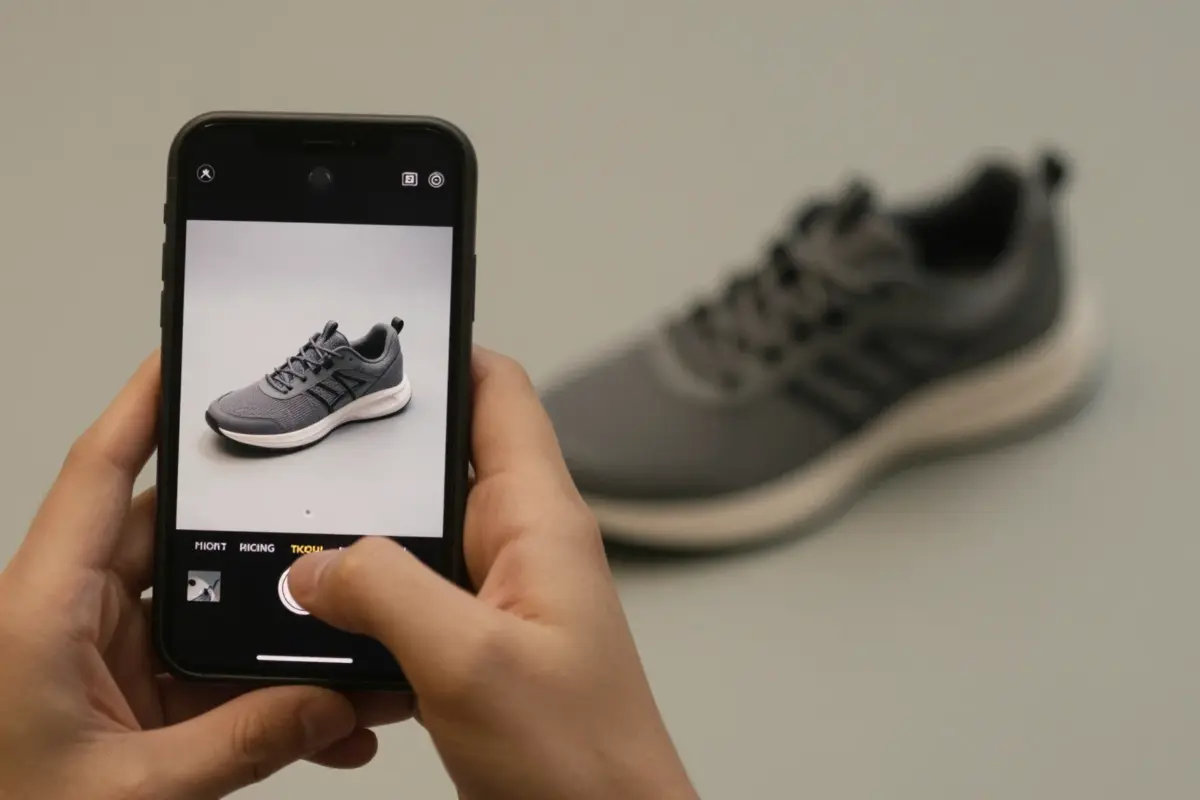
Photograph the item and Legit Check runs these same checks in seconds, returning a confidence score and the reasoning behind it.
Use Materials, Smell, and Weight as Tells
Your hands catch things a photo cannot.
Genuine leather and suede feel supple and consistent. Cheap fakes use stiff, plasticky material that creases hard and looks flat under light. Press the panels and notice how they give.
Smell the shoe. A strong chemical or glue odor that does not fade is a common counterfeit sign. Real pairs may smell new, but not harsh.
Weight matters too. Many fakes feel noticeably lighter or heavier than the real pair because the factory used different foams and materials. If you own a verified pair, a side by side heft check is quick and telling.
How to Legit Check Dunks, Jordans, and Yeezys in 60 Seconds
Some models get faked more than others, so it helps to know the fast tells.
To legit check Dunks, focus on the stitching around the Swoosh and the shape of the toe box. Fake Dunks often run the Swoosh stitch loose and push the toe too round.
To legit check Jordan 1s, look at the wings logo stamp, the ankle collar shape, and the size tag font. These three together catch most replicas.
To legit check Yeezys, check the sole pattern, the knit weave, and the size tag stitching. The weave on fakes tends to look uniform and flat. For model by model breakdowns, browse our sneaker legit check guides.
Memorizing every model is a lot. When you would rather not, photograph the pair and let Legit Check run the same checks and return a confidence score with the reasoning behind it.
Compare Against a Verified Pair Before You Buy
The single strongest check is comparison. Every tell above gets easier when you have a known real pair or a trusted reference next to you.
Pull official product photos from the brand, or a verified listing, and match details one by one. Government resources like the U.S. counterfeit awareness site also explain your rights if a seller ships you a fake. The same comparison logic applies to bags, watches, and more in our guide on how to legit check anything.
Buy from sellers with real return policies. If a deal on a hyped pair looks far too cheap, that price is usually the biggest tell of all.
Frequently asked questions
Legitly offers AI-assisted guidance, not guaranteed authentication. For high-value purchases, confirm with a professional authenticator.