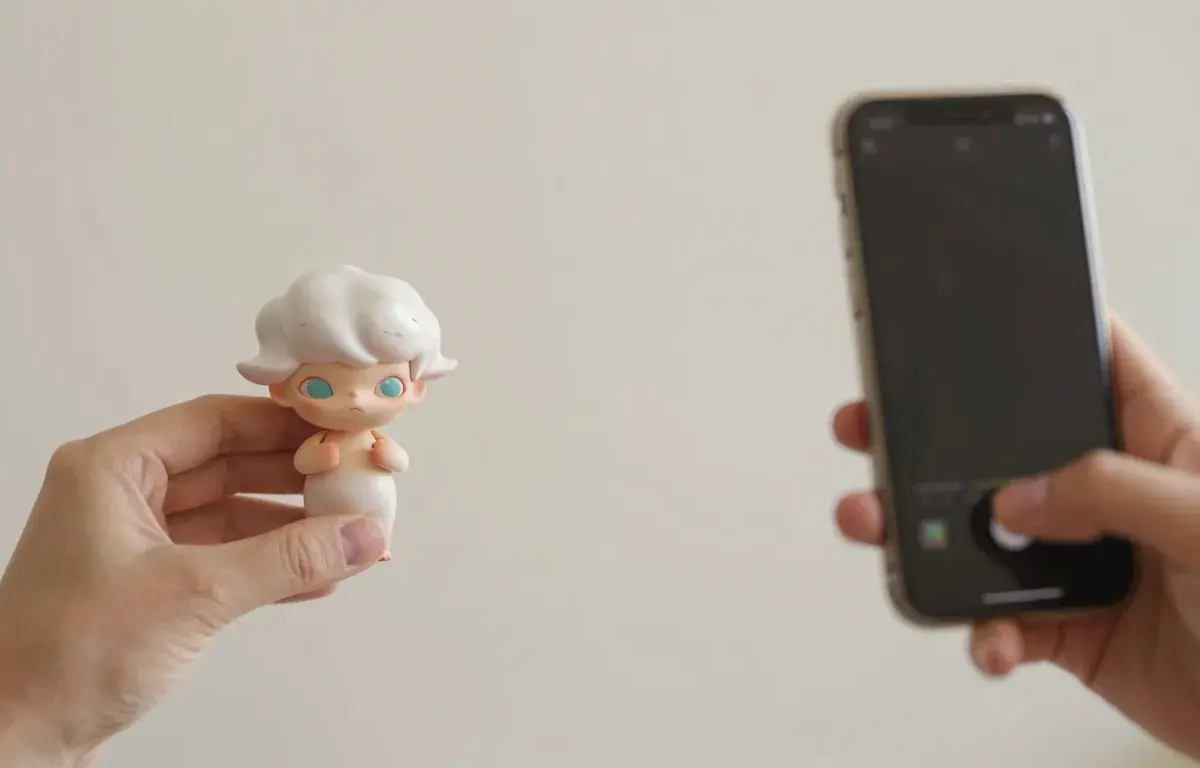
The fastest way to spot a fake Labubu is to count the teeth, because a genuine one has exactly nine. From there you check the embossed Pop Mart stamp on the foot, scan the QR code on the box, and read the paint and color. I have checked a lot of these, and the fakes almost always slip up on at least one of those details.
Start with the face: count the teeth
The first thing I check on any Labubu is the mouth. A genuine Labubu has exactly nine teeth in that pointed grin, and the count stays the same across almost every release.
Fakes get this wrong constantly. I have seen copies with seven teeth, eight teeth, and even ten. If you count anything other than nine, you are very likely holding a fake.
Shape matters as much as the count. The real teeth are even, sharp, and evenly spaced, like a tidy little saw. Fake teeth tend to look blobby, crooked, or melted together.
Look at the whole face while you are there. Genuine eyes sit at a specific height with a slightly mischievous tilt. Off proportions, googly eyes, or a smile that runs too wide are all warning signs.
Check the foot for the embossed Pop Mart stamp
Turn the figure over and look at the feet. Authentic Pop Mart Labubu figures carry an embossed Pop Mart logo pressed into the bottom of one foot.
The key word is embossed. On a real one the logo is molded into the vinyl, so you can feel the raised or recessed letters with your fingernail. It is crisp and evenly stamped.
Fakes usually print the logo in flat ink, or they emboss it so shallow and messy that the letters run together. Some of the cheaper copies skip the stamp entirely.
A stamp that looks fine at a glance can still be off in spacing or depth. That is where Legit Check earns its keep, because it reads those fine details from a photo and hands back a confidence score with the reasoning, instead of leaving you to guess.
Scan the QR code on the box
Newer authentic boxes ship with a QR code and a security sticker. Scan the code with your phone camera before you get attached to the figure.
A real code sends you to Pop Mart’s official verification flow. You can cross-check the brand on Pop Mart’s official site. If the link goes nowhere, redirects to a random page, or the sticker peels off like a cheap label, treat the box as suspect.
The sticker itself has texture. Genuine ones often carry a subtle hologram or a grain you can feel. Flat, glossy, printer-paper stickers are a common fake tell.
One caveat keeps me honest here. Scammers have started cloning QR stickers, so a working code is reassuring but not proof on its own. Use it alongside the physical checks, not instead of them.
Study the box and packaging print
Packaging is where corners get cut. Pull the box close and study the print quality.
Genuine Pop Mart boxes use crisp, evenly inked text with correct fonts and tight alignment. The branding sits exactly where it should, release after release.
Fake boxes give themselves away with fuzzy print, slightly wrong fonts, off-center logos, and colors that look washed out or too neon. A spelling error anywhere on the box is an instant no.
Seals matter too. A factory blind box is sealed cleanly. Reglued flaps, tape residue, or a box that has clearly been opened and reclosed suggest a swapped or fake figure inside.
Photograph the item and Legit Check runs these same checks in seconds, returning a confidence score and the reasoning behind it.
Judge the paint and color
Color is one of the fastest tells once you know the right shade. Labubu skin tones are muted and consistent, not candy-bright.
Genuine paint is even and matte, with clean edges where one color meets another. The blush on the cheeks is soft and symmetrical.
Fakes tend to run glossy, oversaturated, or oddly pale. Look for paint that bleeds past its lines, smudges near the eyes, or patchy coverage where the bare vinyl shows through.
Feel the material and give it a sniff
Handle the figure and trust your senses. Genuine Labubu vinyl feels solid and smooth, and the plush pendant versions have soft, even fur.
Fakes often feel lighter, hollow, or slightly greasy. On plush versions the fur can be coarse, matted, or shed the moment you touch it.
Smell it. A strong chemical or glue odor is a classic counterfeit sign, because cheaper factories lean on harsher solvents and adhesives.
Seams tell a story too. Neat stitching and clean vinyl seams point to genuine. Loose threads, visible glue, or rough mold lines point the other way.
Weigh the price and the seller
Price is the tell people ignore most. If a brand new release is selling for a fraction of retail, there is usually a reason.
Buy from Pop Mart directly or from sellers with a real track record and a clear return policy. Street stalls and no-name marketplace listings are where most fakes move.
Ask for real photos of the exact item, including the feet, the teeth, and the box QR. A seller who dodges those requests is telling you something.
If you collect across more than one line, the same approach applies to other collectibles, and you can see how the photo checks work on the how it works page. When the figure is pricey or secondhand, photograph the teeth and foot stamp and let Legit Check read the details, so you walk in knowing what you are looking at instead of hoping.
Frequently asked questions
Legitly offers AI-assisted guidance, not guaranteed authentication. For high-value purchases, confirm with a professional authenticator.