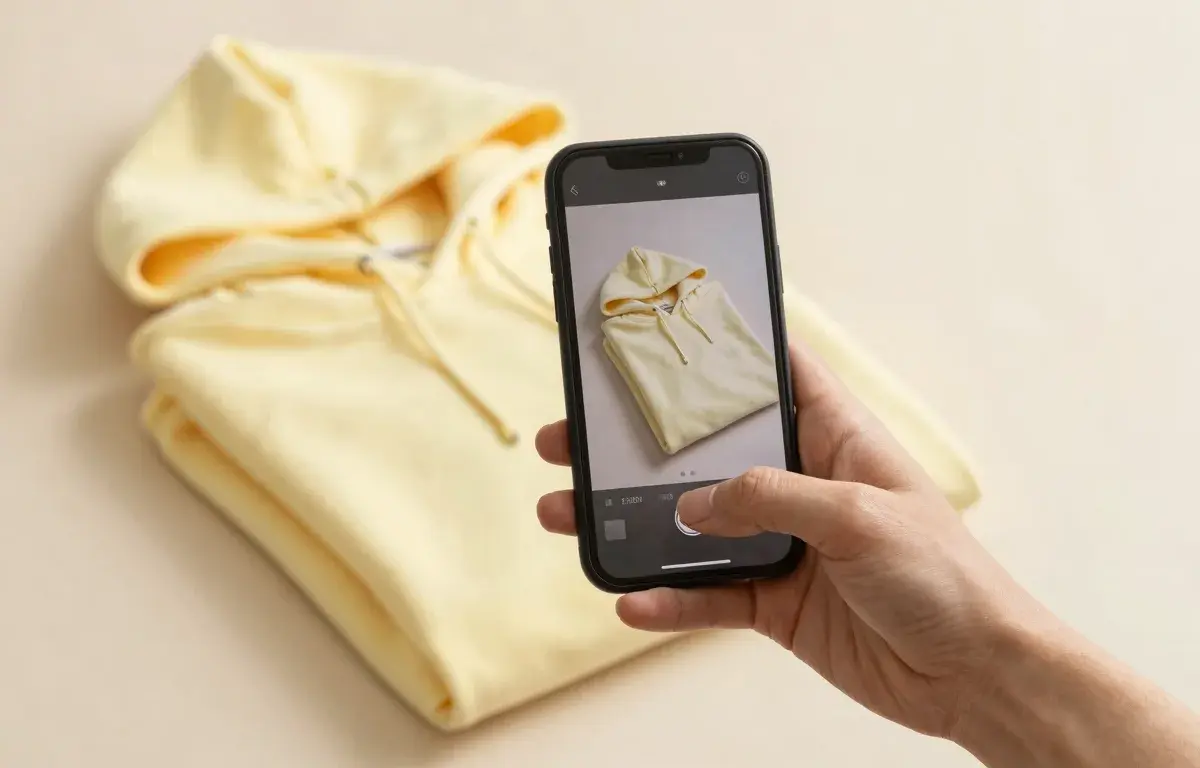
The fastest way to spot a fake Drew House hoodie is to read the four letters inside the smiley mouth, then check the neck tag font and the weight of the fleece. Real drew pieces use a clean, evenly spaced mascot and heavy brushed cotton. Fakes almost always slip on the lettering or feel thin the second you pick them up.
Start with the smiley mascot
The drew house mascot is a simple smiley face, and simple is exactly what counterfeiters get wrong. The first thing I look at is proportion. On a real hoodie the two dot eyes sit level with each other, are the same size, and leave an even gap between them. The mouth is a smooth, confident curve, not a lazy flat line.
Fakes tend to drift here. In my years checking listings I have seen eyes that are slightly different sizes, set too close together, or nudged too high on the face. The smile is often too wide or too shallow, which throws off the whole look. Hold a factory press photo from the brand next to your piece and compare the spacing directly.
Print quality tells the rest of the story. The mascot should have clean edges with no ink bleeding into the fabric and no faint ghosting around the curves. If the whole graphic looks slightly fuzzy or the color sits gray instead of solid, that is a screen-print shortcut a real drop would not ship.
Read the letters in the mouth
Here is the detail most people miss. The mouth is not just a smile, it spells drew in lowercase letters. On an authentic piece those four letters sit evenly along the curve of the smile, with matching stroke weight and consistent spacing.
Counterfeiters struggle to place type on a curve. On fakes the letters often lean at different angles, crowd together at one end, or float off the baseline so the word looks crooked. The e and the w are the usual giveaways, either too rounded or squeezed thin.
This is genuinely hard to judge from a seller photo, especially a compressed one. If you are staring at a listing and cannot tell whether the kerning is right, Legit Check reads exactly these font and spacing signals from a photo and returns a confidence score with the reasoning, so you are not guessing on a curve you can barely see.
Check the neck tag and care label
Flip the hoodie inside out and go to the neck. The main label carries the drew house wordmark in the brand’s rounded lowercase font. On real pieces the print or stitch is crisp, the letters are correctly shaped, and nothing is misspelled. I have caught fakes with the wordmark set in a generic font that was close but visibly heavier than the real thing.
Then find the care label, usually tucked into a side seam. It should list fabric content, country of manufacture, and clear wash symbols. Authentic labels print cleanly with legible small text. Fakes smudge the tiny print, misalign it, or skip details entirely.
A quick tell: check that the neck label is sewn on straight and flat. Loose, crooked, or bubbled labels point to a rushed factory.
Photograph the item and Legit Check runs these same checks in seconds, returning a confidence score and the reasoning behind it.
Feel the fabric weight
drew house built its reputation on heavy, cozy fleece, and weight is one of the hardest things for a cheap factory to copy. A real hoodie feels substantial in your hands, with a dense brushed interior that has a soft, thick nap.
Fakes almost always cut corners on the cotton. They feel lighter, thinner, and sometimes a little papery or slick. If you pick it up expecting heft and it feels like a fast-fashion pullover, trust that reaction.
Color is part of this too. drew leans on soft, muted, pastel tones. Counterfeits often push the colors too bright or too neon, because saturated dye is cheaper and photographs louder. A real butter yellow should look calm, not electric.
Inspect the stitching and print
Turn the hoodie inside out again and run through the construction. Hems and cuffs should have even, tight double-needle stitching with no loose threads hanging off. The ribbing at the waist and wrists should feel firm and spring back, not stretched and floppy.
The mascot print deserves a second, closer look here. Whether it is a flat screen print or a raised puff print, the surface should be even with no cracking, thin patches, or spots where the ink did not take. Bootleg prints crack early and often look tired straight out of the bag.
Check the drawcords and any hardware too. On genuine pieces the cords are consistent in thickness and the tips are finished cleanly. Frayed, uneven, or plasticky cords are a small but telling shortcut.
Consider where you bought it
Provenance matters as much as any stitch. drew house sells through its own site at drop times and a short list of stockists, so it never floods discount marketplaces at a fraction of retail. When I see a brand-new hoodie listed far below its release price on a random storefront, I assume replica until proven otherwise.
The superfake problem is real in streetwear. Some factories now copy the mascot and tags well enough that a single blurry photo will not settle it. When the price is high and the photos are ambiguous, I combine an AI pre-check with a human authenticator rather than trusting either one alone. For a lower-risk secondhand buy, running the seller’s clearest photo through Legit Check first is usually enough to catch the obvious ones before you pay.
If you want the broader playbook, our streetwear authentication guides break down the same checks across other brands, and the Supreme box logo guide and Off-White guide are good companions if you buy across labels. For official drops and the current stockist list, check the brand directly at thedrewhouse.com.
Frequently asked questions
Legitly offers AI-assisted guidance, not guaranteed authentication. For high-value purchases, confirm with a professional authenticator.