The fastest way to spot a fake Kenzo sweatshirt is to check the tiger embroidery, the woven neck label, and the interior care tag. Genuine pieces use dense, raised stitching and heavy brushed cotton, while fakes cut corners on the details you can see and feel. Here are the seven checks I run, in order, before I trust one.
Start with the tiger, stitch by stitch
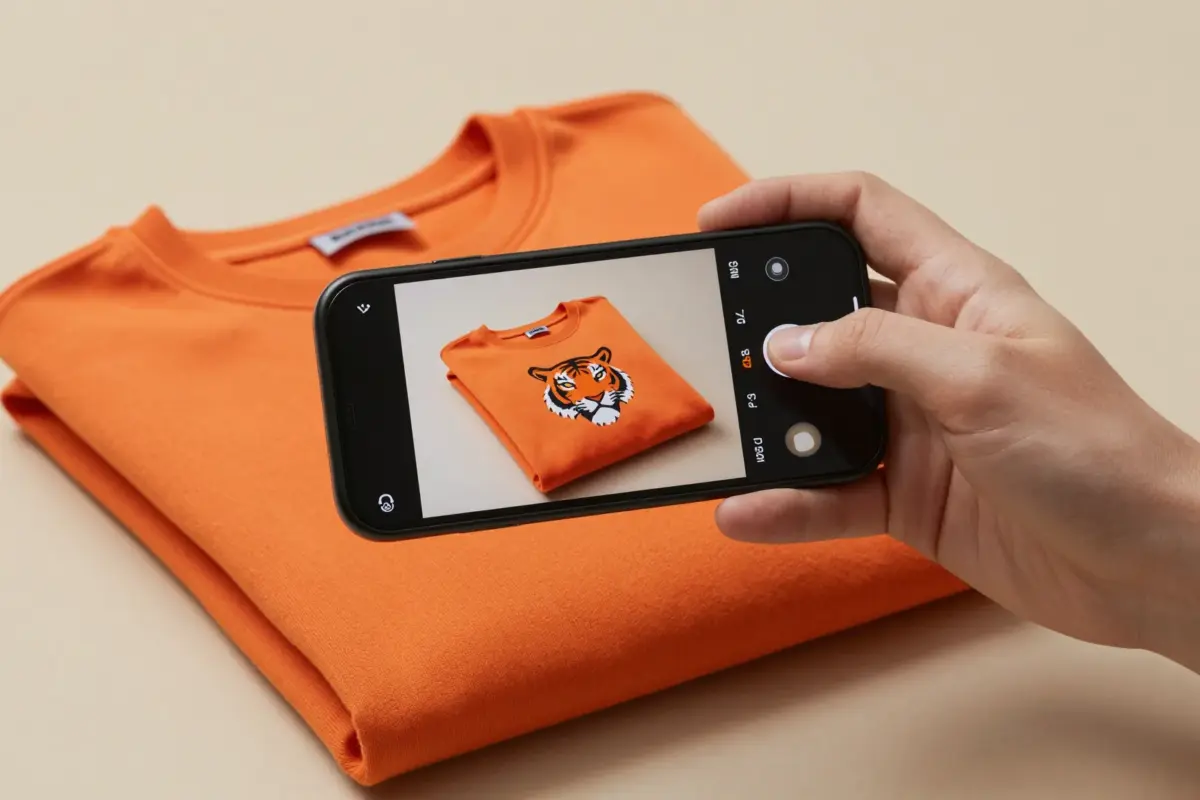
The tiger head is the first thing I look at, and on most fakes it is where the whole thing falls apart. On a genuine Kenzo sweatshirt the embroidery is dense and raised, with thread packed so tightly you cannot see the base fabric between stitches.
Look at the whiskers and the eyes. Real tigers have clean, symmetrical whiskers and pupils with a defined dark center. Fakes often go cross-eyed, with pupils placed slightly off or eyes that sit flat against the fabric.
Run your thumb across the patch. Authentic embroidery feels firm and slightly springy. A fake feels thin, and you can catch loose threads at the edges of the design.
The stripe colors matter too. Genuine transitions between orange, black, and white are sharp. On counterfeits the colors bleed into each other and the black outline looks muddy. If you would rather not eyeball every stitch, Legit Check reads these embroidery patterns from a photo and returns a confidence score with the reasoning behind it.
Read the neck label like a barcode
Flip the collar and read the main label slowly. Genuine Kenzo labels are cleanly woven, with even letter spacing and crisp edges on every character.
Most current pieces read KENZO PARIS. The spacing between letters is consistent, and the label is stitched in straight with no puckering. Fakes tend to get the kerning wrong, so letters look cramped or unevenly spaced.
Check how the label attaches. On the real thing the stitching is tight and parallel to the collar seam. Counterfeits often sew it in crooked, or use thread that does not match the garment.
If the font looks slightly too bold, too thin, or the letters have rounded corners where they should be sharp, treat that as a warning sign. The same label logic applies across other streetwear labels too.
The interior care and composition tag
The interior care tag tells you more than the logo ever will, because factories that copy the outside often ignore the boring details inside.
Genuine Kenzo care tags have sharp, legible print. You should see a clear composition with cotton percentages, a size, a country of origin such as Portugal, and a row of wash symbols.
Read every word. Misspellings, smudged ink, or a font that looks pixelated are common on fakes. Real tags do not fade or blur straight out of the box.
Check the country of origin against the price and the seller. Kenzo produces in a handful of countries, and a tag claiming an unusual origin paired with a bargain price is worth a second look.
Photograph the item and Legit Check runs these same checks in seconds, returning a confidence score and the reasoning behind it.
Feel the fabric and the weight
Weight is one of the hardest things for a counterfeit to fake, because heavy cotton costs more.
A genuine Kenzo sweatshirt uses thick, brushed cotton that holds its shape and has real structure when you hold it up. Fakes feel light and papery, and they drape limply instead of standing on their own.
Give it the pinch test. Authentic fabric springs back. A thin fake stays creased and starts pilling after a wash or two.
Check the print and logo typography
Kenzo uses a specific set of logos, and the details are where fakes get lazy.
The classic block KENZO logo has clean, even letterforms. The Boke flower motif has a set petal shape, and the little eye motif keeps consistent proportions. Compare any print against official product photos on the Kenzo website.
On prints, check the edges. Genuine screen prints have crisp borders and even ink coverage. Fakes show fuzzy edges, cracking, or ink that sits too thick.
Construction: seams, hems, and ribbing
Turn the sweatshirt inside out. The interior tells you whether it was built or thrown together.
Genuine Kenzo seams are clean and even, with tight stitching and no stray threads hanging off. The ribbed cuffs and hem have real elasticity and snap back into place.
Fakes cut corners here. Look for uneven hems, loose threads at the seams, and ribbing that feels stretched out or floppy.
Where you bought it and what you paid
The last check has nothing to do with the garment. It is about where it came from.
Kenzo sweatshirts hold their value, so a brand-new piece at a fraction of retail is the loudest red flag there is. Deep discounts on unfamiliar sites, especially marketplaces known for replicas, almost always mean a fake.
Ask for a receipt or proof of purchase, and check the seller history on resale platforms. A legit seller can usually show where they sourced it.
For a higher-value Kenzo piece, pairing an AI pre-check with a professional authenticator is the safest route. Snap a few photos, run them through Legit Check for an instant read, then send it to a human verifier if the money on the line justifies it. If you buy on resale platforms often, it also helps to read up on how to authenticate any item and how the same tells show up on other streetwear brands.
Frequently asked questions
Legitly offers AI-assisted guidance, not guaranteed authentication. For high-value purchases, confirm with a professional authenticator.