The fastest way to spot a fake Dolce & Gabbana is to look at the neck label first, then the crown logo, then the hardware. On real pieces the DOLCE & GABBANA lettering is clean and evenly spaced, the embroidery is dense, and zippers and buttons carry crisp DG engraving. Fakes usually slip on at least one of these. Here are the six checks I run, in the order I run them.
Start with the neck label, it fails first on fakes
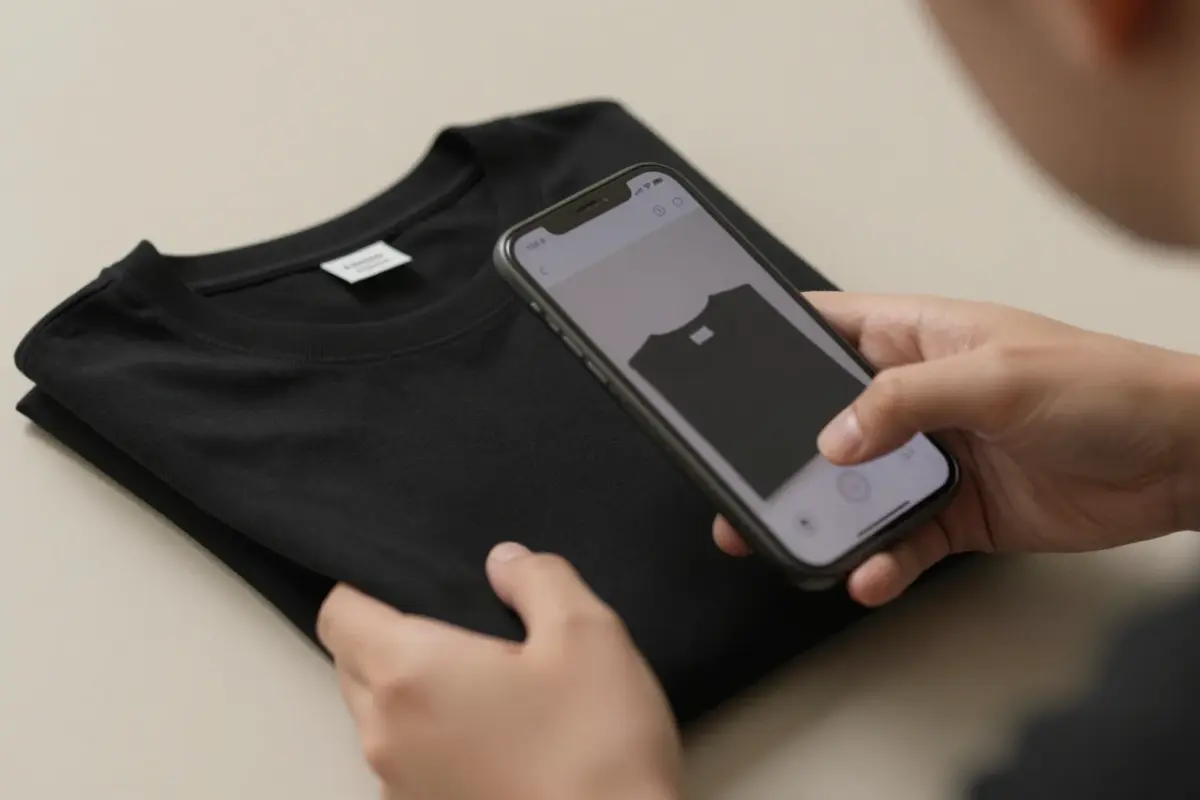
The first thing I check on any Dolce & Gabbana piece is the main neck label. Counterfeiters get the outline close, but the fine details drift.
On genuine pieces the text reads DOLCE & GABBANA in clean, evenly spaced capitals. The ampersand sits centered with equal breathing room on both sides. Fakes often squeeze the letters together, use a slightly heavier font weight, or leave the ampersand looking cramped.
Look at how the label is sewn in. Real labels lie flat with tight, straight rows of stitching and no loose threads. Fakes tend to pucker, wander off line, or show glue residue at the edges.
Many current pieces also carry a woven MADE IN ITALY line under the logo. Check the spelling and the alignment. A crooked, off-center, or blurry line is a strong red flag.
Read the crown and DG logo up close
Dolce & Gabbana leans on two signatures: the crown motif and the interlocking DG. Both are where cheap copies give themselves away.
On a real embroidered crown the stitches are dense and raised, with clean points and no gaps where the backing shows through. Fakes look flatter, thinner, and often have loose thread ends you can feel with a fingernail.
For printed DG logos, check the edges under good light. Authentic prints have sharp borders and consistent thickness. Fakes bleed at the edges, look slightly pixelated, or sit unevenly on the fabric.
Proportion matters too. Study official product photos of the exact piece and compare the logo size and placement. Counterfeits frequently print the mark a touch too large or set it a few millimeters off from where it should be.
The crown embroidery is one of those details that is hard to judge from a single phone photo. If you are not sure, Legit Check reads these logo and stitching signals from your photos and gives you a confidence score with the reasoning behind it, so you are not guessing alone.
Check the interior care label and batch details
Flip the piece inside out and find the care label, usually seam-stitched on the lower side or inside the placket. This is a spot fakers rush.
Genuine care labels print cleanly, with a readable fabric composition, wash symbols, and a size that matches the neck tag. The text is sharp, not smudged, and the rows line up.
Many recent Dolce & Gabbana garments include a small QR or serial detail sewn in for verification. If your piece has one, scan it and see whether it resolves to official brand information. A code that goes nowhere, or a garment that should have one and does not, is worth a second look.
Watch for mismatches. If the neck tag says one size and the care label says another, or the composition looks generic, that inconsistency usually means the tags were sourced separately, which is a fake pattern I see constantly. For more brands with this same care-label trick, see my Moschino guide.
Inspect the stitching and the fabric weight
Construction is one of the hardest things for a counterfeiter to fake cheaply, so it is one of the most reliable tells.
Run your hand over the seams. Real Dolce & Gabbana stitching is even and tight, with a consistent stitch count and no skipped or crooked runs. Hems sit flat. Fakes show wavy seam lines, loose threads at the cuffs and hem, and inconsistent spacing.
The fabric itself carries information. Authentic cotton tees and hoodies feel substantial and hold their shape. A lot of fakes use thinner, papery material that wrinkles fast and feels light in the hand.
Check the inside of prints and appliques. Genuine pieces finish the reverse cleanly. Counterfeits often leave rough backing, excess adhesive, or threads hanging where a real garment would be tidy.
Photograph the item and Legit Check runs these same checks in seconds, returning a confidence score and the reasoning behind it.
Hardware tells the truth: zippers, buttons, plaques
On jackets, pants, and bags, the hardware is often the fastest giveaway.
Authentic Dolce & Gabbana metal parts feel solid and cool, with crisp, deep engraving of the DG or brand name. Zippers run smoothly and frequently come from known makers with their own stamps on the pull. Fakes use lighter metal, shallow or smudged engraving, and zippers that catch or feel flimsy.
Buttons should be evenly finished with clean lettering, securely attached with tight thread work. Loose buttons, uneven paint, or a logo that is slightly misspelled or off-font all point to a copy.
Metal plaques and logo tags should sit flush and level. If a plaque is glued on crooked or the engraving looks etched-on rather than pressed, treat it as suspect. This same hardware logic applies across designer streetwear, which I cover in my other streetwear authentication guides.
How to legit check Dolce & Gabbana in 60 seconds
When I need a fast read, I run the same short loop every time.
No single check is proof on its own. Authentication is about the pattern. One soft detail can happen on a real piece, but two or three together usually mean a fake.
If you would rather not memorize all of this, photograph the item and let Legit Check run these same signals for you. It gives a real, caution, or fake reading with a confidence score and the reasoning, which is handy before you pay. For a four-figure purchase, pair that AI pre-check with a professional authenticator. You can confirm the official brand details on the Dolce & Gabbana website.
Frequently asked questions
Legitly offers AI-assisted guidance, not guaranteed authentication. For high-value purchases, confirm with a professional authenticator.