The fastest way to spot a fake Human Made tee is to check three things: the heart logo embroidery, the woven neck tag, and where the shirt came from. Real Human Made pieces use dense, clean satin-stitch embroidery on heavyweight cotton, and they almost never turn up cheap. In my years checking listings, the counterfeits give themselves away at the logo before I even reach for the tags.
The heart logo, up close
The heart logo is where most fakes fall apart, so I always start there.
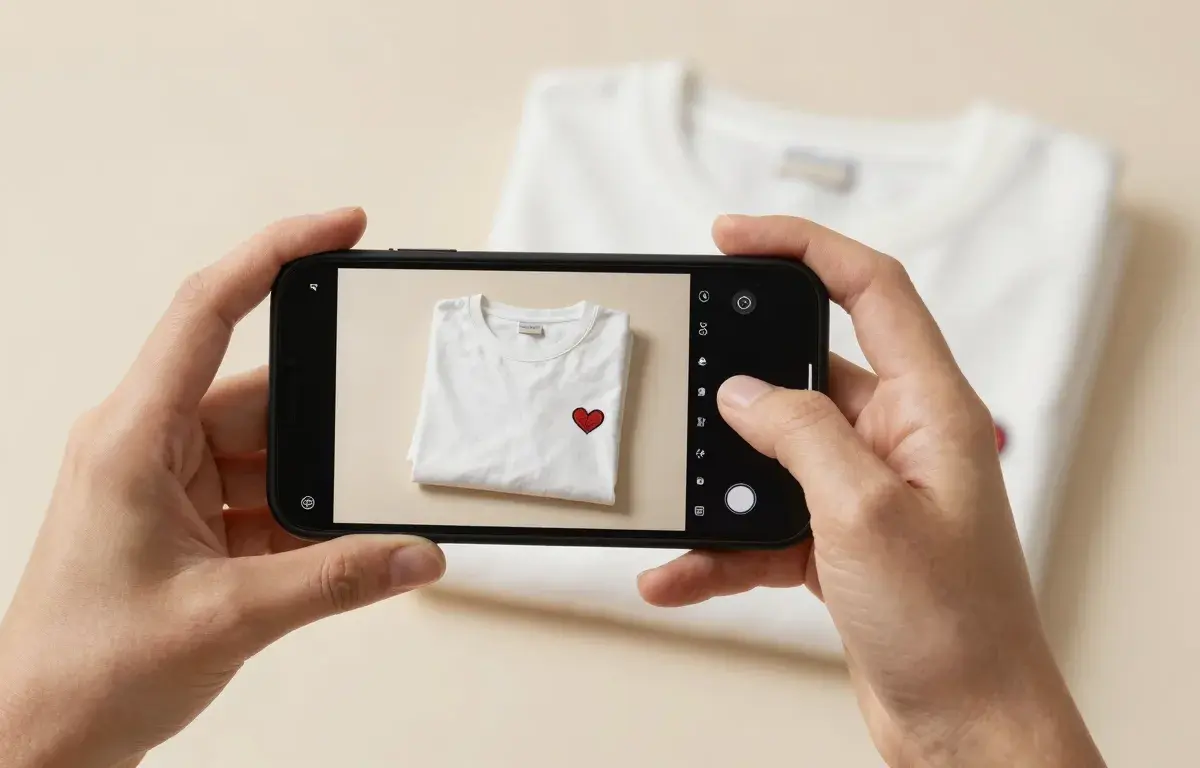
On a real Human Made piece the heart is embroidered with dense, tightly packed satin stitching. The edges are sharp, the red is a deep true red, and the small HUMAN MADE wordmark sitting across the heart is evenly spaced and easy to read.
Fakes tend to rush this part. Look for loose or thin thread, a slightly orange or washed-out red, and letters in the wordmark that crowd together or sit at an uneven baseline.
Hold the logo at an angle under light. Real embroidery catches the light evenly across the whole heart. If one side looks flatter, or the thread density changes halfway through, treat it as a red flag.
Fabric weight and the boxy fit
Human Made leans hard on a vintage, heavyweight feel, and that is hard to fake cheaply.
Pick the shirt up. A real heart-logo tee is noticeably heavy for a T-shirt, with a dense, slightly rough cotton hand and a tubular body knit. The fit is boxy and a little short, cut to look like an old American work tee.
Counterfeits usually cut cost on fabric first. A fake often feels thin and papery, drapes limp instead of holding its shape, and runs longer and slimmer because it was printed on a generic blank.
If you can compare weights, that alone tells you a lot. The genuine article has heft. A light, flimsy tee claiming to be Human Made is the single most common tell I see.
Neck tag and wash label
The tags carry a lot of small details, and factories rarely get all of them right.
Real Human Made neck labels are cleanly woven, not printed, with the brand mark and stitching sitting flat and even. The wash label lists fabric content and country of origin (often Made in Japan on main-line pieces) in a crisp, correct font, with tidy stitching around all four edges.
On fakes, the woven tag can look furry or slightly blurred, the thread ends fray, and the care label font is off, either too bold, too thin, or spaced wrong. Misspellings and smudged printing are instant fails.
Tag detail like this is genuinely hard to judge from a single photo, which is exactly the kind of thing Legit Check is built for. Photograph the tags and it reads the fine print in seconds, then gives you a reasoned real, caution, or fake call with a confidence score.
Photograph the item and Legit Check runs these same checks in seconds, returning a confidence score and the reasoning behind it.
Mascot prints and graphics
Beyond the heart, Human Made is known for its mascots, the duck, the polar bear, the tiger sweat, and the artwork quality separates real from fake.
On authentic prints the linework is crisp, colors sit in register with no bleeding past the outline, and the graphic feels solid and slightly textured on heavyweight fabric.
Fakes often show fuzzy edges, colors that are off by a shade, or registration that is slightly misaligned so the outline and fill do not line up. Cracked or overly rubbery prints on a brand-new shirt are another warning sign.
Pull up an official product photo of the exact graphic and compare proportions side by side. Counterfeiters frequently resize or redraw the mascot just enough that the head, eyes, or spacing look subtly wrong. The same registration test works on other embroidered streetwear, from Bape, NIGO’s earlier label, to Chrome Hearts.
Stitching, seams and finishing
Construction is the quiet tell. Real Human Made is finished like a premium garment, and fakes cut corners where you are least likely to look.
Turn the shirt inside out. Genuine seams are even, with consistent stitch density and clean, secure ends. Collars are ribbed and recover their shape when stretched gently. Hems lie flat.
On counterfeits you will often find loose threads, wavy or skipped stitching, a collar that stays stretched out, and glue or puckering where panels meet. None of these are subtle once you are looking for them.
Run the 60-second checklist below before you commit to anything.
Where you bought it (and the price)
Half of authentication is answering a simple question: where did this come from?
Human Made sells through its own official site and a short list of authorized stockists like Dover Street Market and a handful of respected retailers. Pieces sell out and hold value, so heavy discounts on current items are rare. A brand-new grail tee at a fraction of retail from an unknown seller is the oldest trap there is.
Ask the seller for clear photos of the heart logo, both tags, and the inside seams. A real owner can produce these in a minute. Vagueness, or stock images only, is a reason to walk. For more brand-by-brand help, see our streetwear authentication guides.
If you would rather not memorize every tag font and stitch pattern, run the photos through Legit Check for an AI pre-check that explains its reasoning, then use a professional authenticator for anything expensive. Between the two you will rarely get burned.
Frequently asked questions
Legitly offers AI-assisted guidance, not guaranteed authentication. For high-value purchases, confirm with a professional authenticator.