The fastest way to legit check a sneaker is to compare three things against a verified pair: the box label, the stitching, and the overall silhouette. Most fakes fall apart on at least one of them. I have checked thousands of listings, and the sloppy details almost always show up before you even reach the logo.
Start With the Box and the Label
The box is the first thing I look at, because factories that cut corners on the shoe usually cut them here too.
A real sneaker box is sturdy, the right color for that model, and printed cleanly. Flip it over and find the label. It lists the style code (SKU), the size, the colorway name, and a barcode. Read the font. On genuine pairs the text is sharp and evenly spaced, with no smudging or crooked alignment.
Now do the one check most buyers skip. The style code on the box label must match the style code on the shoe’s tongue tag exactly. Fakes often print a real SKU on the box but pair it with a mismatched or blurry tag inside. If those two numbers disagree, stop there.
- Box feels flimsy or the wrong shade for the model
- Label font looks thin, fuzzy, or unevenly spaced
- SKU on the box does not match the SKU on the tongue tag
Read the Stitching
Stitching is where mass-produced fakes give themselves away. Real factories run tight, even rows with consistent spacing and no loose threads.
Look along the panels, the swoosh or stripes, and the toe. Genuine stitching sits flat and straight. On fakes you will see crooked lines, uneven gaps, thread that wanders off the seam, or little glue marks where the work was rushed.
Pay attention to thread color too. It should match the pair it is copying. A slightly off shade of white, or a thicker thread than the reference photos show, is a quiet but reliable tell.
Check the Silhouette and Shape
Every model has a signature shape, and this is the hardest thing for a factory to fake.
Set the shoe next to a verified reference photo from the brand or a trusted marketplace. Look at the toe box height, the curve of the sole, and how the panels sit. Fakes are often too round, too flat, or slightly bloated because the mold is a copy of a copy.
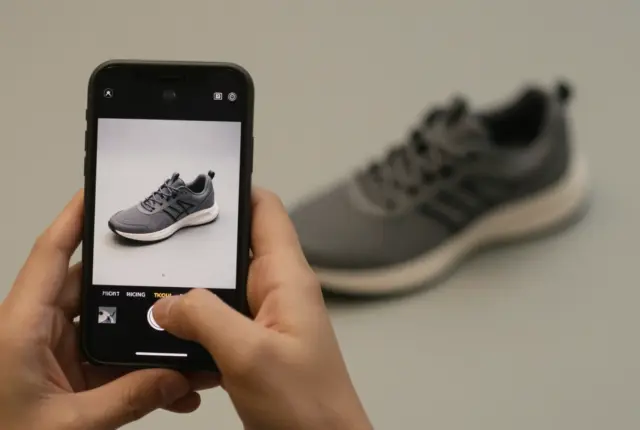
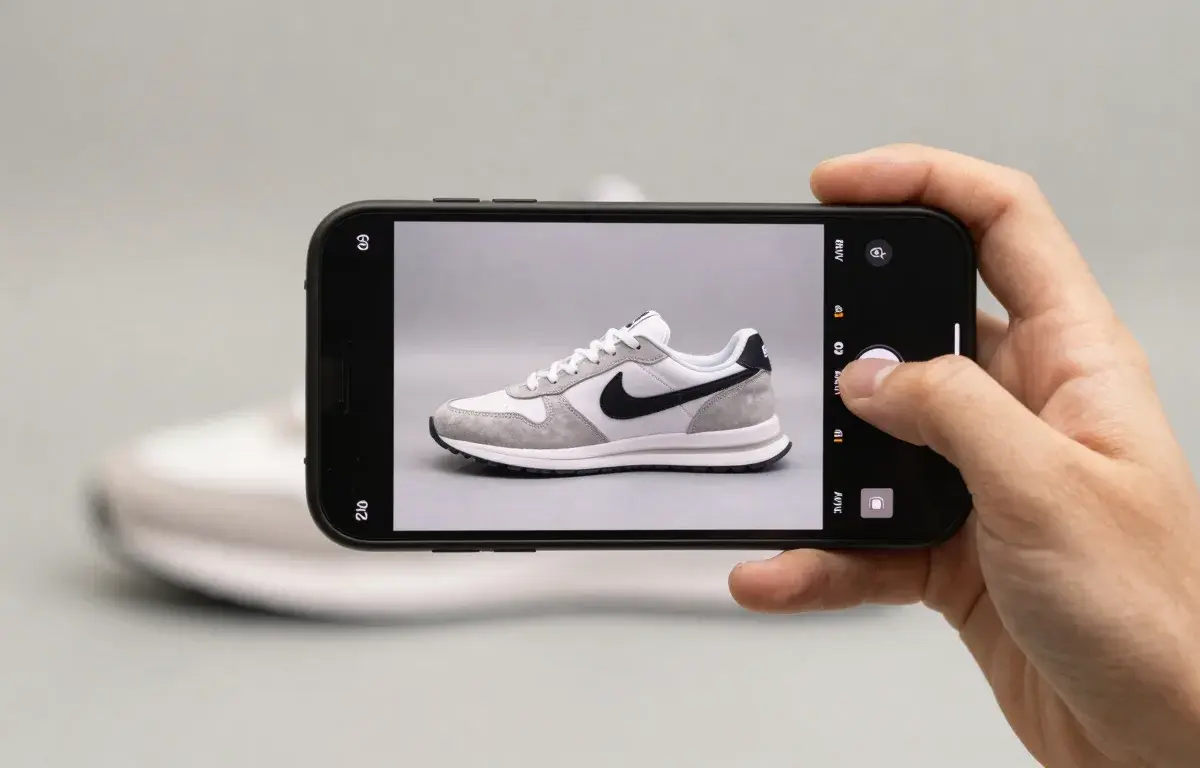
Silhouette is subtle, and after a long day of scrolling listings it is easy to miss. This is exactly the kind of read Legit Check is built for. You photograph the pair, its AI compares the proportions and construction against known-good references, and it hands back a confidence score with the reasoning behind it.
Photograph the pair and Legit Check runs these same checks in seconds, returning a confidence score and the reasoning behind it.
Feel the Materials and Smell the Glue
Get the shoe in your hands. Genuine leather and suede have weight and grain. Cheap synthetic substitutes feel plasticky, stiff, or oddly light.
Then smell it. A strong chemical or solvent odor is one of the most consistent signs of a fake. Real factories use adhesives that air out. Rushed counterfeit production does not.
Check the insole and the foam. Premium cushioning springs back when you press it. Fakes often use a spongy, hollow substitute that stays flat under your thumb.
Decode the Size Tag and SKU
Flip up the tongue and read the size tag closely. A genuine tag lists the style code, the US, UK, EU, and CM size conversions, the country of manufacture, and a production date.
The math has to line up. If the US size and the CM measurement do not match the brand’s real conversion chart, the tag is wrong. Fakes also slip up on font weight and spacing, so compare it against a verified tag for the same model.
That style code is your anchor. Match it back to the box, and if the brand or marketplace offers online verification, run it there. Marketplaces like StockX publish how their authentication works if you want to see what the pros check.
How to Legit Check Dunks, Jordans, and Yeezys in 60 Seconds
Once you know the general rules, each popular model has a fast tell you can run in under a minute.
How to legit check Dunks: Look at the overlapping panels and the swoosh stitching. Real Dunks have clean, evenly spaced perforations and panels that meet precisely. Fakes bunch the stitching and often get the panel shape slightly wrong.
Jordan 1: Check the wings logo stamp and the toe box shape. The stamp should be crisp and correctly placed, and the toe should have that signature bulge, not a flat or overly rounded front.
Yeezy 350: The knit pattern and the monofilament side stripe are the giveaways. Real pairs have a tight, consistent weave and a stripe that glows subtly under light. Fakes look loose, and the stripe sits flat.
For any of these, a 60-second read comes down to the same instinct. Does the detail look deliberate, or rushed?
Superfakes and the Safe Way to Buy
The hardest pairs to call are superfakes, made on better molds with closer materials. They copy the obvious tells, so you have to stack several checks instead of trusting one.
Protect yourself before money changes hands. Buy from sellers with real history and reviews, ask for detailed photos of the box label, stitching, and tongue tag, and keep every receipt. For a model-agnostic walkthrough, see our guide on how to legit check any sneaker, and browse more brand breakdowns in the sneakers section.
If you would rather not memorize every model quirk, Legit Check runs these same checks from a photo and returns a reasoned read in seconds, which is enough to catch the obvious fakes before you commit. On a four-figure grail, treat that AI pre-check as a fast first pass and still get a professional authenticator to confirm.
Frequently asked questions
Legitly offers AI-assisted guidance, not guaranteed authentication. For high-value purchases, confirm with a professional authenticator.